Being an entrepreneur, you’ve probably attended countless networking events. These days, every organization hosts gatherings for visibility, exposure, and building wider networks. Some people walk away with new opportunities, while others leave feeling drained, convinced that networking just isn’t for them. They tell themselves, “I’m not great at making new connections. I’m an introvert. This isn’t my cup of tea.”
But pause for a moment. How often have you regretted not approaching that one business leader who could have changed the trajectory of your growth? The truth is, networking is not a casual activity—it’s a serious business strategy. Results don’t come naturally; they come to those who are intentional about building deep relationships. And that’s where relationship networking stands apart from event networking.
Most entrepreneurs confuse networking with visibility. They attend events, collect contacts, and hope something clicks. But real growth doesn’t come from exposure alone. It comes from building relationships that compound over time.
Event Networking: High Energy, Low Depth
Event networking is what most people are familiar with—large gatherings, mixers, conferences, and even speed networking formats where you meet multiple people in a short span.
There’s nothing wrong with it. In fact, it serves a purpose.
What makes event networking effective:
- Quick exposure to a large number of people
- Great for brand visibility
- Useful for exploring new industries or markets
- Helps you practice your pitch and communication
Formats like speed networking are designed for efficiency—structured interactions, quick introductions, and rapid exchange of information. You might walk out with 20 contacts in an hour.
But here’s the catch.
What event networking often lacks:
- Depth of connection
- Trust-building time
- Follow-through consistency
You may remember faces, but not stories. You may exchange cards, but not conversations that matter.
That’s why many entrepreneurs feel exhausted after events. It feels like effort without clarity.
Relationship Networking: Low Volume, High Impact
Relationship networking flips the approach.
Instead of asking, “How many people can I meet?”
It asks, “How well can I connect with the right people?”
This is where structured networking comes into play. Instead of random interactions, there’s a system, consistency, and intention behind every meeting.
What defines relationship networking:
- Regular, structured interactions
- Focus on trust and credibility
- Long-term engagement over one-time meetings
- A culture of giving before expecting
Here, you’re not just introducing your business, you’re building familiarity. People begin to understand what you do, who you serve, and how they can refer you.
The Real Difference: Contacts vs Connections
Let’s simplify it. Event networking gives you contacts.
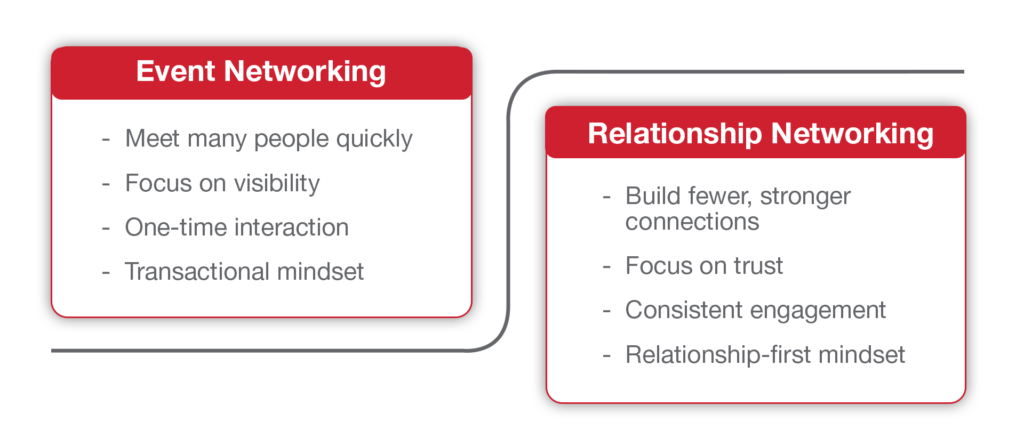
Relationship networking gives you connections that convert.
Why Relationship Networking Drives Long-Term Business Growth
If your goal is to grow your business consistently, you need more than introductions—you need advocacy.
People don’t refer businesses they barely know.
They refer businesses they trust.
Here’s what relationship networking unlocks:
1. Consistent Referrals
When people understand your work deeply, they actively recommend you.
2. Stronger Credibility
Repeated interactions build familiarity. Familiarity builds trust. Trust builds credibility.
3. Better Quality Opportunities
Instead of random leads, you receive qualified referrals—people who already trust you before meeting you.
4. Long-Term Business Growth
This isn’t about quick wins. It’s about creating a pipeline that keeps working for you over time.
Where Most Entrepreneurs Go Wrong
A common mistake is relying only on events and expecting results.
They attend, connect, and move on. What they don’t realise is that it’s a process. Without follow-ups, consistency, and deeper engagement, even the best conversations fade away.
Another mistake? Treating networking as a pitch platform.
If every interaction is about selling, people disengage.
If every interaction is about understanding and helping, people remember.
How to Shift from Event Networking to Relationship Networking
You don’t have to stop attending events. You just need to use them differently.
1. Start with Events, But Don’t Stop There
Use events to identify the right people. Then take the conversation forward beyond the event.
2. Follow Up with Intent
A simple “great meeting you” isn’t enough. Continue the conversation. Add value.
3. Be Part of Structured Networking Groups
Consistency matters. Regular interactions build stronger relationships than occasional meetings.
4. Focus on Giving First
Referrals don’t come from asking. They come only from active contribution.
5. Build Recall, Not Just Reach
It’s better to have 10 people who clearly understand your business than 100 who barely remember you.
The Hybrid Approach: Best of Both Worlds
The smartest entrepreneurs don’t choose one over the other—they combine both.
- Use event networking for visibility and expansion
- Use relationship networking for trust and conversion
Think of events as the starting point.
Think of relationships as the growth engine.
Final Thought
Networking isn’t about being the most outgoing person in the room. It’s about being the most intentional. You don’t need to meet everyone. You need to build the right relationships—the ones that help you grow your business with trust, consistency, and purpose. Because in the end, business doesn’t grow through conversations.
It grows through relationships.
FAQs
1. What is business networking and why is building relationships important?
Business networking is the process of creating meaningful professional connections that lead to opportunities, referrals, and growth. Building relationships is essential because trust is what drives real business. People refer and collaborate with those they know well.
2. What is speed networking?
Speed networking is a structured format where participants meet multiple people in a short time through timed interactions. It’s designed for quick introductions and expanding your contact base efficiently.
3. Is event networking ineffective?
Not at all. Event networking is great for visibility and meeting new people. However, without follow-up and relationship-building, it rarely leads to long-term results.
4. What is structured networking?
Structured networking involves regular, organized meetings with a consistent group of professionals, focused on building trust, sharing referrals, and supporting each other’s growth.
5. How does relationship networking help in long-term business growth?
It creates a reliable network of people who understand your business and actively refer you, leading to consistent and high-quality opportunities over time.
6. How can introverts succeed in networking?
Introverts often excel in relationship networking because it focuses on deeper, one-on-one connections rather than large group interactions. Consistency and authenticity matter more than being outgoing.
