What if the biggest obstacle to growing your business isn’t generating more referrals, but making the most of the referrals you already receive?
Most business owners spend a significant amount of time learning how to network, building relationships, attending events, and creating visibility for their business. The goal is simple: generate more opportunities.
Yet, somewhere between receiving a referral and converting it into a meaningful business relationship, many opportunities quietly disappear.
What’s surprising is that this happens in an era where staying connected has never been easier. We have smartphones, emails, messaging apps, CRMs, calendar reminders, and countless productivity tools. We can connect with someone across the globe in seconds. And yet, referrals still slip through the cracks.
The issue isn’t a lack of technology. The issue is a lack of intentional follow-up.
In the world of business networking, referrals are acts of trust. And businesses that understand this distinction are often the ones that grow the fastest. This blog offers a simple framework for following up without feeling pushy turning referrals into revenue.
Most Business Owners Don’t Have a Referral Problem
Let’s challenge a common assumption.
When business slows down, many entrepreneurs immediately think, “I need more referrals.” Sometimes that’s true. But more often, the real issue is hidden elsewhere. They don’t have a referral generation problem. They have a referral stewardship problem.
Think about the referrals you’ve received over the last six months.
- How many were contacted immediately?
- How many received consistent follow-up?
- How many were tracked through a structured process?
- How many were converted into lasting relationships?
The answers can be revealing. Before looking for more referrals, it may be worth asking whether the opportunities already received are being managed effectively.
The Solution: Audit Your Referral Journey
Instead of focusing solely on generating more referrals, examine what happens after a referral is received.
Map the entire journey:
- Referral received
- Initial contact
- Discovery conversation
- Follow-up actions
- Conversion outcome
When businesses start measuring this process, they often discover opportunities they’ve been leaving on the table.
Every Referral Reflects Your Reputation
One of the biggest mistakes business owners make is treating referrals like leads. They’re not the same thing.
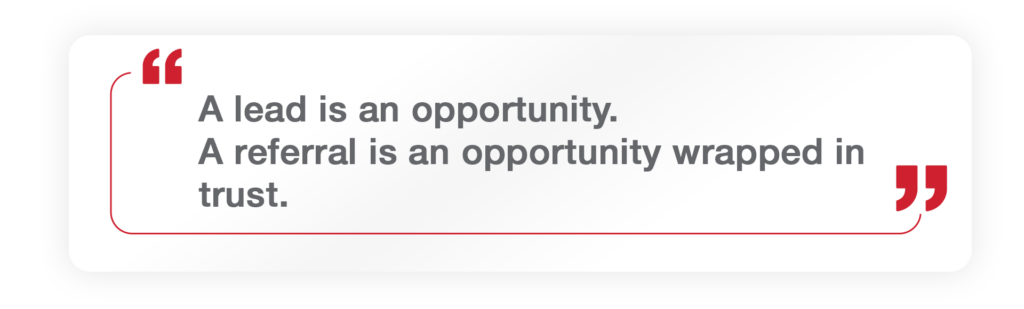
When someone refers you, they are doing more than introducing you to a prospect. They are attaching their reputation to yours.
They are saying, “I trust this person enough to recommend them.” That’s a powerful statement. Which means every referral creates a moment of accountability. The prospect is evaluating your professionalism, but so is the person who referred you.
How quickly you respond, how effectively you communicate, and how seriously you take the opportunity contributes to your reputation within your network.
The Solution: Create a Referral Response Standard
Top-performing professionals don’t leave referral follow-up to chance. They create standards.
For example:
- Every referral receives a response within 24 hours.
- Every referral is logged into a tracking system.
- Every referral receives a structured follow-up sequence.
Consistency is crucial no matter what.
Why Good Intentions Aren’t Enough
Most missed referrals don’t happen because people are careless. They happen because people are busy.
…A business owner receives a referral during a meeting. They intend to call later. Another priority appears. The day gets away from them. The referral sits untouched. A week passes. The opportunity cools. The prospect moves on…
Sound familiar? The challenge isn’t motivation. It’s systems. Business owners often underestimate how many opportunities are lost because they rely on memory rather than process.
The Solution: Build a Follow-Up Strategy
A strong follow-up strategy should be as important as your sales strategy.
Consider implementing:
- CRM reminders
- Weekly referral reviews
- Follow-up templates
- Accountability check-ins
The goal is simple. Make it impossible for valuable referrals to be forgotten.
The Real Cost of Poor Follow-Up
Most people think poor follow-up costs them a sale. That’s only part of the story.
Poor follow-up affects:
- Future referrals
- Professional credibility
- Referral partner confidence
- Long-term relationship strength
In business networking, every interaction sends a signal. A strong follow-up signals professionalism. A delayed response signals uncertainty. No response signals unreliability. Over time, those signals shape how people perceive your business. And perception influences who receives future opportunities.
The Solution: Measure More Than Conversions
Most businesses track revenue and fewer track referral performance.
Consider monitoring:
- Referral response time
- Referral conversion rat
- Referral source activity
- Follow-up completion rate
What gets measured gets improved. And what gets improved often contributes directly to business growth.
The Businesses That Win Are the Ones That Build Trust Faster
One of the most Overlooked truths in business is this:
People rarely buy because of information alone.
- They buy because of trust.
But only if the recipient reinforces it.
Imagine two business owners receiving the same referral. The first responds immediately, schedules a conversation, listens carefully, and follows through on every commitment. The second takes days to respond and struggles to maintain communication. Who is more likely to earn the business? Who is more likely to receive future referrals?
The Solution: Focus on Relationship Velocity
Many businesses focus on sales velocity. A better approach is to focus on relationship velocity. The faster trust develops, the greater the likelihood of long-term success.
Turning Referrals Into a Growth System
The most successful networkers view referrals as part of a larger growth system.
Every referral becomes an opportunity to:
- Deliver value
- Strengthen relationships
- Demonstrate professionalism
- Build credibility
- Generate future opportunities
Because even when a referral doesn’t convert immediately, a relationship can still create opportunities months or even years later.
To Wrap Up
In business networking, every referral represents confidence, credibility, and opportunity.
- Build a stronger follow-up strategy.
- Create systems that support consistency.
- Treat every referral as a reflection of your reputation.
Because when trust is managed intentionally, referrals stop being random opportunities and become a predictable way to grow your business.
Frequently Asked Questions
1. Why is follow-up important in business networking?
Follow-up demonstrates professionalism, builds trust, and increases the likelihood of converting referrals into meaningful business relationships.
2. What is a good follow-up strategy for referrals?
A strong follow-up strategy includes responding quickly, maintaining consistent communication, tracking referral progress, and nurturing the relationship beyond the initial conversation.
3. How can referrals help grow your business?
Referrals provide access to prospects who already have a degree of trust in your business, often leading to higher conversion rates and stronger long-term relationships.
4. How quickly should I contact a referral?
As a best practice, referrals should be acknowledged and contacted within 24 hours whenever possible to maintain momentum and demonstrate professionalism.
